316 Reasoning questions asked in RRB JE previous year papers, each with the correct answer and explanation. Read them free on UTpaper, or attempt the full papers as timed online tests.
In a certain code,
‘boy likes games’ is coded as 'tu vw xy'
‘girl likes music’ is coded as 'za vw rs'
‘music games hobby’ is coded as 'rs xy pq'
Q. What is the code for hobby ?
Seven people, A, L, M, I, R, H and S, are sitting in a row, facing north.
Only A sits to the left of S. Only four people sit between A and H. Only I sits between L
and R and L is not an immediate neighbor of H.
Who sits at the extreme right of the line?
Based on the English alphabetical order, three of the following four letter-cluster pairs
are alike in a certain way and thus form a group. Which is the one that does not belong
to that group?
(NOTE: The odd man out is not based on the number of consonants/vowels or their
position in the letter cluster.)
18 is related to 270 following a certain logic. Following the same logic, 21 is related to
315. To which of the following is 24 related, following the same logic?
(NOTE: Operations should be performed on the whole numbers, without breaking down
the numbers into their constituent digits. E.g. 13 – Operations on 13 such as adding
/subtracting /multiplying etc. to 13 can be performed. Breaking down 13 into 1 and 3 and
then performing mathematical operations on 1 and 3 is not allowed.)
In a certain code language,
‘A + B’ means ‘A is the son of B’,
‘A – B’ means ‘A is the sister of B’,
‘A x B’ means ‘A is the wife of B’ and
‘A ÷ B’ means ‘A is the father of B.
How is Q related to D if ‘Q + E ÷ R – C x D’?
24 is related to 270 following a certain logic. Following the same logic, 31 is related to
340. To which of the following is 43 related, following the same logic?
(NOTE: Operations should be performed on the whole numbers, without breaking down
the numbers into their constituent digits. E.g. 13 – Operations on 13 such as adding
/subtracting /multiplying etc. to 13 can be performed. Breaking down 13 into 1 and 3 and
then performing mathematical operations on 1 and 3 is not allowed.)
In a certain code,
'big grand wedding' is coded as 'rc af bg'
'grand birthday celebration' is coded as 'kp vg rc'
'enjoy big celebration' is coded as 'af zd vg'
(all the codes are two letter coded only)
What is the possible code for ‘birthday bash’?
Refer to the following letter, symbol series and answer the question
(Left) H F % G R @ # S $ M * % & N E Q Z U L @ T W (Right)
If all the symbols are dropped from the series, which of the following will be fourth from
the right?
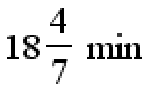
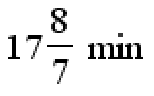
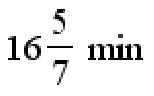
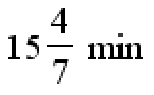
Two trains having lengths of 430 m and 120 m are running at speeds of 70 km/h and 100
km/h, respectively, in the same direction. The time taken (in minutes) by the faster train,
coming from behind, to completely cross the other train is:
RD 15 is related to UI -1 in a certain way. In the same way, WG 13 is related to ZL -3. To
which of the following is OG 1 related, following the same logic?
Ajay starts from Point A and drives 6 km towards north. He then takes a left turn, drives
5 km, turns left and drives 15 km. He then takes a left turn and drives 12 km. He takes a
final left turn, drives 9 km and stops at Point P. How far (shortest distance) and towards
which direction should he drive in order to reach Point A again? (All turns are 90° turns
only unless specified.)
Read the given statements and conclusions carefully. Assuming that the information
given in the statements is true, even if it appears to be at variance with commonly
known facts, decide which of the given conclusions logically follow(s) from the
statements.
Statements:
All cups are glasses.
All glasses are bottles.
All bottles are jars.
Conclusions:
(I): All cups are bottles.
(II): All glasses are jars.
AOnly conclusion (I) follows.
BOnly conclusion (II) follows.
CBoth conclusions (I) and (II) follow.
DNeither conclusion (I) nor (II) follows.
Show answerHide answer
Correct answer: (C) Both conclusions (I) and (II) follow.
Select the set in which the numbers are related in the same way as are the numbers of
the following sets.
(NOTE : Operations should be performed on the whole numbers, without breaking down
the numbers into its constituent digits. E.g. 13 – Operations on 13 such as adding /
subtracting /multiplying etc. to 13 can be performed. Breaking down 13 into 1 and 3 and
then performing mathematical operations on 1 and 3 is not allowed.)
(136, 220, 84)
(144, 240, 96)
This question is based on the words given below.
IRE AWE DAY FUR
In each of the words, each vowel is changed to the second letter preceding it in the
English alphabetical order, and each consonant is changed to the letter immediately
following it in the English alphabetical order. In how many letter-clusters thus formed
will no vowel appear?
Seven people, A, L, M, I, R, H and S, are sitting in a row, facing north.
No one sits to the right of S. Only three people sit between S and H. Only two people sit
between H and R. M sits third to the left of L. I sits to the immediate right of L.
How many people sit between A and R?
In the following number-pairs, the second number is obtained by applying certain
mathematical operations to the first number. Select the set in which the numbers are
related in the same way as are the numbers of the following sets.
(NOTE: Operations should be performed on the whole numbers, without breaking down
the numbers into their constituent digits. E.g. 13 – Operations on 13 such as adding /
subtracting /multiplying etc. to 13 can be performed. Breaking down 13 into 1 and 3 and
then performing mathematical operations on 1 and 3 is not allowed.)
124, 232
107, 215
Refer to the following letter, number and symbol series and answer the question that
follows.
(Left) K 6 & M 4 @ R 7 ! F ^ N $ Q 8 # T @ P 9 * Y 3 & Z 2 $ L ^ W (Right)
If all the letters are dropped, which of the following will be fifth from the right?
Diwakar starts from Point A and drives 8 km towards West. He then takes a left turn,
drives 6 km, turns left and drives 11 km. He then takes a left turn and drives 9 km. He
takes a final left turn, drives 3 km and stops at Point P. How far (shortest distance) and
towards which direction should he drive in order to reach Point A again? (All turns are
90 degrees turns only unless specified)
Select the set in which the numbers are related in the same way as are the numbers of
the following sets.
(NOTE: Operations should be performed on the whole numbers, without breaking down
the numbers into their constituent digits. E.g. 13 – Operations on 13 such as adding /
subtracting /multiplying, etc. to 13 can be performed. Breaking down 13 into 1 and 3 and
then performing mathematical operations on 1 and 3 is not allowed.)
(13,22,2)
(4,26,15)
Read the given statements and conclusions carefully. You have to take the given
statements to be true even if they seem to be at variance from commonly known
facts. You have to decide which conclusions logically follow(s) from the given
statements.
Statements:
All rabbits are mats.
All rabbits are zebras.
All zebras are lamps.
Conclusions:
(I): All rabbits are lamps.
(II): Some zebras are mats.
ANeither conclusion (I) nor (II) follows
BOnly conclusion (II) follows
COnly conclusion (I) follows
DBoth conclusions (I) and (II) follow
Show answerHide answer
Correct answer: (D) Both conclusions (I) and (II) follow
Based on the alphabetical order, three of the following four are alike in a certain way
and thus form a group.
Which is the one that does not belong to that group?
(Note: The odd man out is not based on the number of consonants/vowels or their
position in the letter cluster.)
Select the set in which the numbers are related in the same way as are the numbers of
the following sets.
(NOTE : Operations should be performed on the whole numbers, without breaking down
the numbers into its constituent digits. E.g. 13 – Operations on 13 such as adding /
subtracting /multiplying etc. to 13 can be performed. Breaking down 13 into 1 and 3 and
then performing mathematical operations on 1 and 3 is not allowed.)
(14, 12, 168)
(16, 13, 208)
In a certain code language,
A + B means ‘A is the daughter of B’
A – B means ‘A is the brother of B’
A x B means ‘A is the wife of B’
A ÷ B means ‘A is the father of B’
Based on the above, how is E related to K if ‘E – F + G ÷ H x K’?
In a certain code,
'cracking lame jokes' is coded as 'kt vs fm'
'cracking colourful fireworks' is coded as 'fi ye kt'
'lame but colourful' is coded as 'vs xc ye'
(all the codes are two letter coded only)
What is the possible code for ‘fireworks lame’?
In a certain code,
'blue pen write' is coded as 'ka tu re'
'red pen draw' is coded as 'mo tu si'
'blue brush draw' is coded as 'ka lo si'
(all the codes are two letter coded only)
What is the code for “blue pen”?
MU 11 is related to OY -2 in a certain way. In the same way, PQ 10 is related to RU -3. To
which of the following is UR 14 related, following the same logic?
A question is followed by two statements numbered (I) and (II). You have to decide
whether the data provided in the statements are sufficient to answer the question. Read
both the statements carefully and decide the appropriate answer.
Six people, A, B, C, D, E and F, are sitting in a straight line facing north. How many
people sit to the right of D?
I: No one sits to the right of F. Only two people sit between F and B.
II: D sits to the immediate left of F. E sits to the immediate left of B.
AData in Statement I alone is sufficient to answer the question while data in statement II is not
BData in Statement II alone is sufficient to answer the question while data in statement I is not
CData in both statements I and II together (and not statement I alone or statement II alone) are sufficient to answer the question
DData in both statements I and II together are NOT sufficient to answer the question
Show answerHide answer
Correct answer: (C) Data in both statements I and II together (and not statement I alone or statement II alone) are sufficient to answer the question
Refer to the following letter, number and symbol series and answer the question that
follows.
(Left) % P N G @ 8 7 % 6 # $ * L C T 1 @ # 2 Z 8 E 9 (Right)
If all the numbers are dropped from the series, which of the following will be fifth from
the right?
Seven people, A, L, M, I, R, H and S, are sitting in a row, facing north.
Only three people sit to the left of A. Only H sits to the right of R. Only three people sit
between R and L. M sits at some place to the left of I but at some place to the right of S.
How many people sit between S and I?
217 is related to 115 following a certain logic. Following the same logic, 183 is related to
81. To which of the given options is 234 related, following the same logic?
(NOTE: Operations should be performed on the whole numbers, without breaking down
the numbers into their constituent digits. E.g. 13 – Operations on 13 such as
adding/subtracting/multiplying to 13 can be performed. Breaking down 13 into 1 and 3
and then performing mathematical operations on 1 and 3 is not allowed.)
Govind starts from Point A and drives 5 km towards south. He then takes a left turn,
drives 5 km, turns left and drives 12 km. He then takes a left turn and drives 11 km. He
takes a final left turn, drives 7 km and stops at Point P. How far (shortest distance) and
towards which direction should he drive in order to reach Point A again? (All turns are
90° turns only unless specified.)
A technician needs to connect a new appliance in a domestic circuit to ensure it
receives full voltage and can be operated independently. What should the technician
do?
AConnect the appliance only to the neutral wire
BConnect the appliance in parallel with existing appliances
CConnect the appliance only to the earth wire
DConnect the appliance in series with existing appliances
Show answerHide answer
Correct answer: (B) Connect the appliance in parallel with existing appliances
Two men A and B walk round a circle 1300 metres in circumference. A walks at the rate
of 150 metres per minute and B at the rate 80 metres per minute. If they both start at the
same time from the same point and walk in the same direction, after how much time will
they meet each other?
In this question, a question is followed by two statements numbered (I) and (II). You
have to decide whether the data provided in the statements is sufficient to answer the
question. Read both the statements and decide the appropriate answer.
Af, Bg, Cq, Dy and En are sitting around a circular table, facing the centre. Who sits
second to the right of Bg?
(I) Af sits to the immediate right of En. Cq is the immediate neighbour of Dy and En.
(II) Dy sits to the immediate right of Bg. En sits second to the left of Bg.
AData in Statement II alone is sufficient to answer the question while data in Statement I is not.
BBoth Statements I and II together (and not Statement I alone or Statement II alone) are sufficient to answer the question.
CData in Statement I alone is sufficient to answer the question while data in Statement II is not.
DData in Statements I and II together are NOT sufficient to answer the question.
Show answerHide answer
Correct answer: (C) Data in Statement I alone is sufficient to answer the question while data in Statement II is not.
Select the set in which the numbers are related in the same way as are the numbers of
the following sets.
(NOTE: Operations should be performed on the whole numbers, without breaking down
the numbers into their constituent digits. E.g. 13 – Operations on 13 such as adding /
subtracting /multiplying, etc. to 13 can be performed. Breaking down 13 into 1 and 3 and
then performing mathematical operations on 1 and 3 is not allowed.)
(2,9,17)
(11,16,60)
Based on the English alphabetical order, three of the following four letter-cluster pairs
are alike in a certain way and thus form a group. Which is the one that does not belong
to that group?
(NOTE: The odd man out is not based on the number of consonants/vowels or their
position in the letter cluster.)
Read the given statements and conclusions carefully. Assuming that the
information given in the statements is true, even if it appears to be at variance
with commonly known facts, decide which of the given conclusion(s) logically
follow(s) from the statements.
Statements: Some bins are cats. No cat is a deer. No cat is a tree.
Conclusions:
(I): No bin is a deer.
(II): Some trees are deers.
ABoth conclusions (I) and (II) follow.
BNeither conclusion (I) nor (II) follows.
COnly conclusion (II) follows.
DOnly conclusion (I) follows.
Show answerHide answer
Correct answer: (B) Neither conclusion (I) nor (II) follows.
In the following number-pairs, the second number is obtained by applying certain
mathematical operations to the first number. Select the set in which the numbers are
related in the same way as are the numbers of the following sets.
(NOTE: Operations should be performed on the whole numbers, without breaking down
the numbers into their constituent digits. E.g. 13 – Operations on 13 such as adding /
subtracting /multiplying etc. to 13 can be performed. Breaking down 13 into 1 and 3 and
then performing mathematical operations on 1 and 3 is not allowed.)
94, 375
115, 396
A76, 358
B107, 389
C81, 364
D72, 353
Show answerHide answer
Correct answer: (D) 72, 353
How to use these RRB JE Reasoning questions
Every question here was asked in a real RRB JE paper; the paper and shift are shown on the card, and the number opens the question on its own page. Try each one before tapping Show answer, then attempt the full RRB JE papers as timed tests to check your speed under exam conditions.